ELI5: how does the water cycle work
// explanation
What is the water cycle?
The water cycle is nature's way of recycling water around Earth [1][2]. The sun heats up water in oceans, lakes, and rivers, turning it into invisible water vapor that floats up into the air [1][3]. Think of it like when a puddle disappears on a sunny day—the water doesn't vanish, it just changes into vapor and goes up into the sky [5].
Why does water go up into the air?
The sun's energy is like a giant heat source that gives water molecules enough power to escape from liquid form and become vapor [1][4]. Even though water normally boils at 100°C, individual water molecules can get energized by the sun's rays and float up one by one, even when it's much cooler [4].
What happens to the water vapor?
As the water vapor rises high into the sky where it's colder, it changes back into liquid water droplets that form clouds [3]. When enough droplets collect together, they become heavy and fall back to Earth as rain or snow [2].
How does the cycle repeat?
The water that falls as rain flows into rivers, lakes, and oceans, where the sun heats it up again and the whole cycle starts over [2][3]. It's like a never-ending circle that keeps Earth's water moving and clean.
// sources
Water molecules are heated by the sun and turn into water vapor that rises into the air through a process called evaporation. Next, the water vapor cools ...
Feb 5, 2026 ... There are many ways that water moves between pools — liquid water evaporates into water vapor, is transported through the atmosphere, condenses ...
How Does the Hydrological Cycle Work? Surface water evaporates from by energy of the sun. The water vapor then forms clouds in the sky. Depending on the ...
Feb 15, 2025 ... Water evaporates at 100 degrees. However when hit with solar rays individual molecules can be energized enough to evaporate 1 by 1. This is how ...
Energy from the sun heats up the surface of the Earth, causing the temperature of the water in our rivers, lakes and oceans to rise. When this happens, some of ...
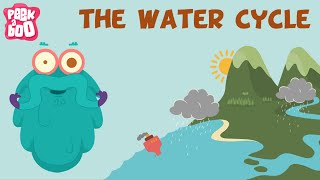
Video by Peekaboo Kidz
Video by Learn Bright

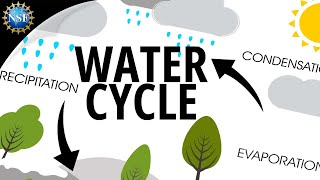
Video by National Science Foundation News