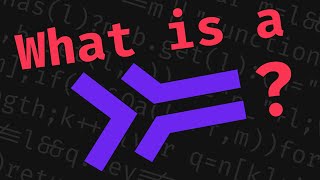
ELI5: monad in haskell
// explanation
What is a monad in Haskell?
A monad is like a special container or box that holds instructions for doing things in order [1][2]. Think of it like a recipe where you follow one step, then the next step depends on what happened in the first step [1].
Why do we need monads?
Monads help us organize computations that depend on each other [1]. Without monads, it would be really messy to chain together multiple operations where each one needs to know what the previous one did [2].
What makes something a monad?
A monad has special rules: it can wrap up a value, and it has a "bind" method that lets you connect one computation to the next [5]. It's like having a rule book that tells you how to plug one instruction into another [4].
How do you use a monad?
You use the >>= operator (called bind) to chain operations together, which makes your code read like a step-by-step list [2][4]. Instead of deeply nested function calls, monads let you write instructions in order [3].
// sources
Jan 24, 2023 ... Monads are used to compute things that depend on other computations. LordGothington. • 3y ago. Don't all functions in Haskell compute things ...
May 27, 2024 ... The monad is a kind of meta-strategy for combining computations into more complex computations. Think of monads as a kind of type-disciplined ...
In this chapter, we're going to learn about a few other monads. We'll see how they can make our programs clearer by letting us treat all sorts of values as ...
Jun 5, 2025 ... Monads can be viewed as a standard programming interface to various data or control structures, which is captured by Haskell's Monad class.
Sep 4, 2008 ... A monad is any type Foo<Bar> which has a "bind" method which takes a function argument of type Bar => Foo<Baz> and returns a Foo<Baz>.
Video by Stephen Edwards

Video by BekBrace

Video by A Byte of Code